
Crown materials: metal-ceramic, zirconia and E-max
A crown is a cap, made to measure, that covers the whole of a tooth above the gum line. It restores the tooth’s shape, strength and colour, and protects whatever is left underneath. Three materials cover almost every situation.
Metal-ceramic (PFM) crowns have a metal shell with porcelain baked over it. They are strong, proven over decades and the least expensive. Their limitation is looks. The porcelain is opaque to hide the metal, and as the gum recedes over the years a dark line can show at the edge. They remain a sensible choice for back teeth on a budget.
Zirconia crowns are milled from a single block of zirconium oxide, a white ceramic that is the strongest material we use. There is no metal, so no dark line, and modern layered zirconia looks close to natural tooth. It is our usual recommendation for molars, for teeth that have had a root canal, for bridges, and for anyone who grinds.
E-max is lithium disilicate, a glass ceramic that is more translucent than zirconia and mimics the way natural enamel catches light. It is the best-looking option and is what we suggest for front teeth and other visible areas. It is slightly less strong than zirconia, so it is not our first choice for heavy grinders or long bridges.
Bridges use the same materials. When a tooth is missing, the teeth on either side are crowned and a false tooth is joined between them, all as one piece. A bridge is fixed, does not come out and needs no surgery, which makes it a good option when the neighbouring teeth already need crowns anyway or when implants are not possible. When those neighbours are healthy and untouched, an implant, which leaves them alone, is usually the better long-term choice.
What treatment actually feels like
A crown takes two visits about a week apart. At the first, the tooth is numbed and shaped to make room for the crown, which involves the same sensations as a filling, vibration and pressure but no pain. An impression or digital scan records the shape, we choose a shade together against your neighbouring teeth, and a temporary crown is fitted so the tooth is protected and you can eat normally.
At the second visit the temporary comes off, the final crown is tried in, the bite is checked and adjusted, and it is cemented in place. No anaesthetic is usually needed. The crown may feel slightly high or unfamiliar for a day or two. If it still feels high after that, a small adjustment fixes it.
Teeth that have not had a root canal can be sensitive to cold for a few weeks after preparation. This settles as the tooth calms down.
Why patients choose i-Smile for crowns and bridges
- CAD/CAM support. Crowns are designed digitally and milled to a precise fit, which matters more than any other factor for how long a crown lasts.
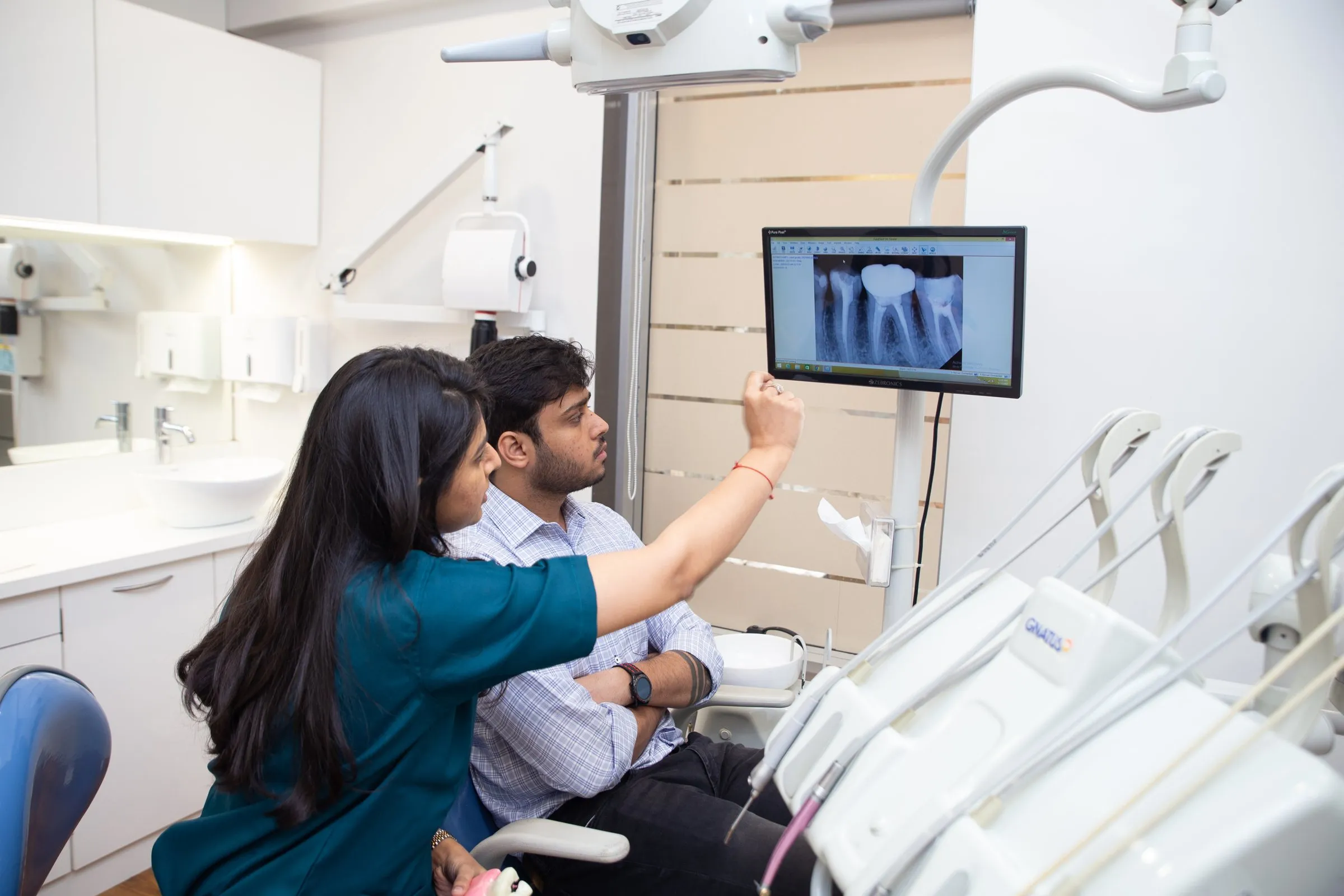
- Digital X-rays (RVG) to check the root and bone before we invest in a crown, and an intraoral camera so you can see why a crown is being recommended.
- One dentist throughout. Dr. Upasana Gosalia prepares the tooth, chooses the shade with you and fits the final crown herself.
- Every instrument autoclaved after every patient.
- Established in Ghatkopar since 2012, rated 5.0 on Practo from over 700 reviews and 4.9 on Google.
- Open until 9 pm, Monday to Saturday, so both visits fit around work.
Aftercare: how to make a crown last
A crown cannot decay, but the tooth underneath it can, right at the edge where crown meets tooth. That margin is what you are looking after.
- Brush twice a day, paying attention to the gum line around the crown.
- Floss daily. For a bridge, use a floss threader or interdental brush to clean under the false tooth.
- Avoid using the crowned tooth to crack nuts, open packets or chew ice.
- If you grind at night, a night guard protects the crown and your other teeth.
- Keep six-monthly check-ups so we can check the margins and the bite.
With that care, crowns typically last 10 to 15 years and often longer. A crown that chips, loosens or develops decay at the edge can usually be replaced.
What changes the price
- Material. Metal-ceramic ₹7,000, zirconia ₹10,000 and E-max from ₹12,000 per tooth at i-Smile.
- Number of units. A bridge replacing one tooth is three units, two crowns and the false tooth between them.
- Rebuilding the tooth. A heavily broken tooth may need a post and core before it can hold a crown.
- Root canal first. If the nerve is exposed or infected, a root canal comes before the crown and is quoted separately.
- Gum treatment. Healthy gums are needed for a clean margin, so deep cleaning is sometimes needed first.