What a first visit looks like
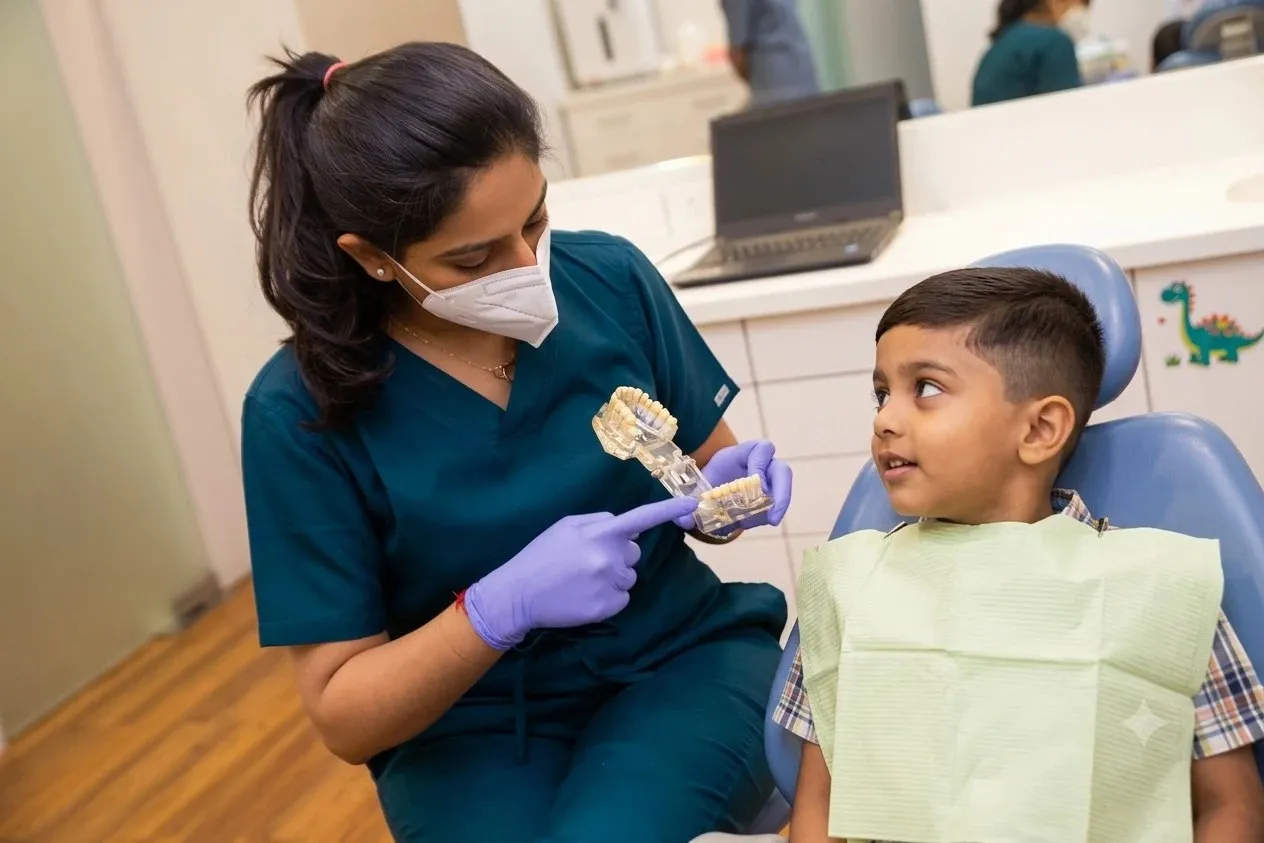
For a two- or three-year-old, the whole visit takes ten minutes. You sit knee to knee with Dr. Upasana, your child lies back on your lap, and she looks at the teeth and gums with a small mirror. You get answers to the questions every parent has: how to brush, how much toothpaste, what to do about the night bottle, when the next teeth are due.
For a preschooler, the chair ride and the water squirter are the highlights. Teeth are counted, polished and painted with fluoride. If everything is healthy, that is the visit.
For a school-age child, we add a check on how the adult teeth are arriving, sealants on new molars, and a conversation about snacks and sugary drinks.
Preventing cavities, which is most of the job
Cavities in children are almost entirely preventable, and prevention is cheaper and kinder than treatment. Four things do most of the work:
- Brushing twice a day with fluoride toothpaste, a smear for under-threes and a pea-sized amount after that, with a parent doing or checking the brushing until about age 8.
- Fluoride varnish at every six-monthly visit.
- Sealants on the chewing surfaces of the first adult molars around age 6 and the second molars around age 12, where most childhood cavities start.
- Fewer sugar hits. It is the number of times a day sugar touches the teeth, not the amount, that matters most. A juice box sipped over an hour does more damage than a sweet eaten in a minute.
When treatment is needed
Small cavities are cleaned and filled with a tooth-coloured filling in one short visit. Deeper cavities that reach the nerve of a milk tooth are treated with a pulpectomy, a gentle root canal for milk teeth, followed by a filling or a small crown so the tooth lasts until it is due to fall out. A milk molar that cannot be saved is removed and, if the adult tooth is years away, a small space maintainer keeps the gap open.
Every step is explained to the child in their language first: the tooth is going to have a sleepy juice, then a tickle, then a special sticker. Parents stay in the room throughout.
Why parents choose i-Smile for their children
- The same dentist for the family. Many of our young patients’ parents were patients first. Children who see their parents treated calmly copy them.
- Short, unhurried visits. Appointments are booked with enough time that nobody is rushed, and a nervous child can have a look-only visit first.
- Prevention priced sensibly. Check-ups, fluoride and sealants are kept affordable so they actually happen twice a year.
- Evening and Saturday slots after school, until 9 pm.
- Honest referrals. If a child needs sedation or hospital-based care, we say so and refer, rather than attempting treatment that would frighten them.
What changes the price
- Type of treatment, from a check-up to a pulpectomy and crown.
- Number of teeth needing sealants or fillings.
- X-rays, only when needed, charged per film.
- Space maintainers and habit appliances, made in a laboratory.