What a full mouth rehabilitation can include
Full mouth rehabilitation is not a single procedure. It is a plan that looks at every tooth, the gums, the bite and the jaw joints together and decides what combination of treatments will restore comfortable chewing, a stable bite and a natural-looking smile. Depending on your case it may include:
- Dental implants to replace missing teeth, either one implant per tooth or a smaller number supporting a fixed bridge across an arch.
- Crowns on teeth that are worn, cracked or heavily filled, usually zirconia or E-max ceramic.
- Bridges where a gap is bordered by teeth that need crowns anyway.
- Root canal treatment for teeth that are infected but worth keeping.
- Gum treatment before anything else, because crowns and implants placed on unhealthy gums fail.
- Extractions of teeth that cannot be saved, with bone grafting where the socket needs preserving for a future implant.
- Implant-supported or conventional dentures where a fixed solution is not possible or not wanted.
- A night guard at the end, if grinding was part of what caused the damage.
The order matters. Foundations first, then implants and healing, then trial teeth, then the final restorations.
What treatment actually feels like
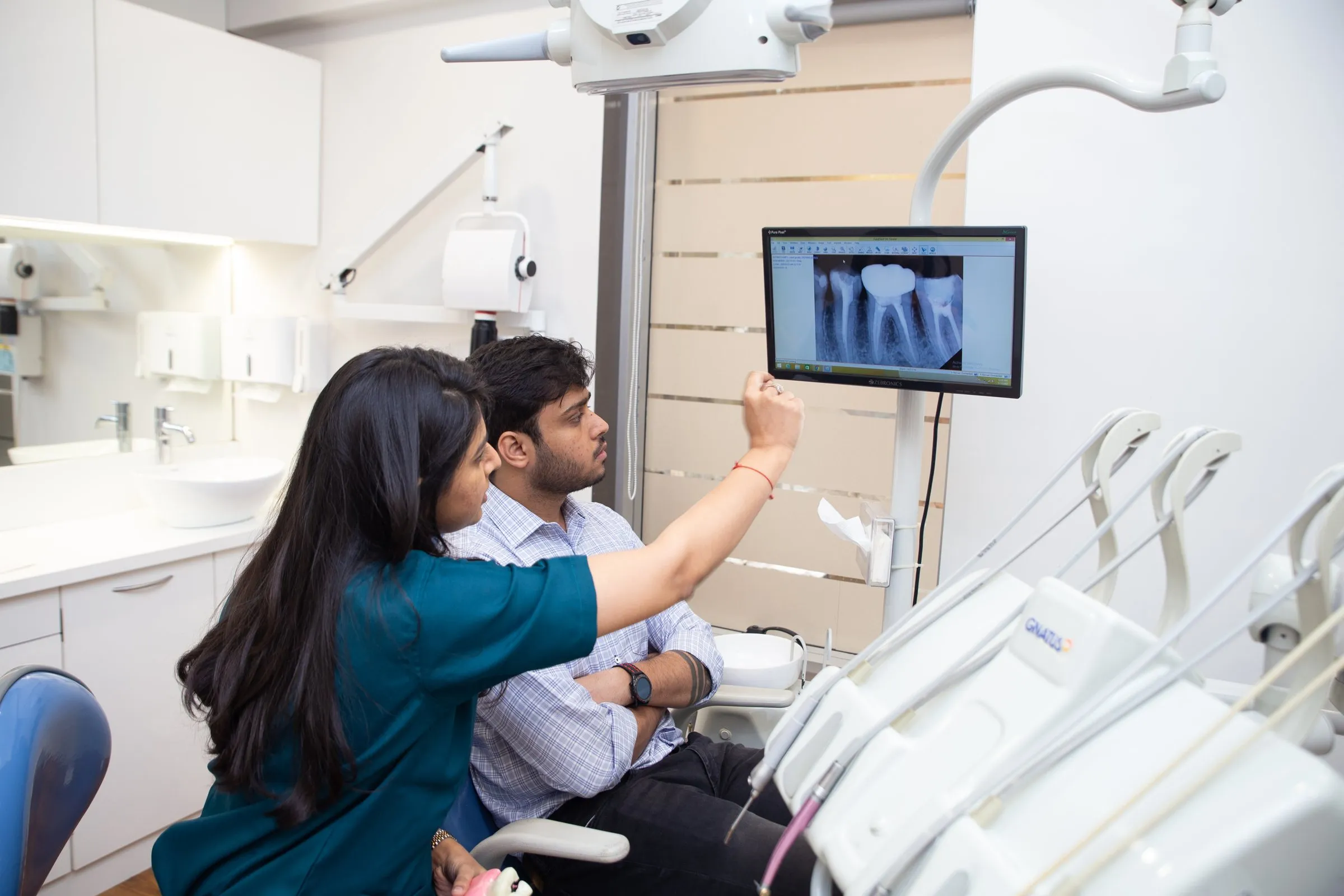
The first visit is mostly talking and recording. Photographs, digital X-rays, impressions or a scan and a record of how your teeth meet take about an hour. You go home with nothing done and come back to see a written plan.
Each treatment stage is done under local anaesthesia in visits of one to two hours. Implant placement is less uncomfortable than most people expect; the surgery itself is painless and the days afterwards feel like a firm bruise, managed with ordinary painkillers and a soft diet. Then there is a quiet period of three to six months while the implants fuse with the bone. You wear temporary teeth during this time, so you are never without a smile.
The trial stage is where most patients feel the change. Temporary crowns and bridges in the planned shape let you test chewing, speech and appearance for a few weeks. If the front teeth look too long or the bite feels wrong, it is adjusted in plastic before anything is made in ceramic.
The final teeth are fitted over one or two visits. There is an adjustment period of a couple of weeks as your lips, tongue and jaw muscles get used to the new shape.
Why patients choose i-Smile for full mouth cases
- Dr. Upasana plans and carries out the whole case. She has hands-on implant training from the Maharashtra University of Health Sciences, Nashik, and has placed over 275 implants since i-Smile opened in 2012. One dentist across implants, crowns and gum work means one person is responsible for how the pieces fit together.
- Digital X-rays and an intraoral camera at every stage, so you see the problem, the plan and the progress.
- CAD/CAM support for accurate crowns and veneers.
- A staged, written plan with costs for each stage before you commit, and EMI options to spread the cost.
- Long hours. Open 9 am to 9 pm, Monday to Saturday, so the many visits a full mouth case needs can be fitted around work.
- Autoclave sterilisation of every instrument, every time.
Looking after your new teeth
Implants and crowns do not decay, but the gum and bone around them can be lost to the same plaque that caused the original problem. Aftercare is not complicated, but it is not optional either.
- Brush twice daily with a soft brush, paying attention to where crowns and bridges meet the gum.
- Clean under bridges and around implants once a day with interdental brushes, superfloss or a water flosser. We show you how.
- Wear the night guard if one was made. Grinding that flattened your natural teeth will chip ceramic just as readily.
- Come for a professional cleaning and check every six months. Implants need their own check for gum health around the post.
- Report any looseness, chipping or bleeding early. Small problems are simple to fix; ignored ones are not.
What changes the price
- Number of implants. A single implant with crown starts at ₹30,000; Straumann costs more than Osstem or Bredent. A full arch on four to six implants is the largest single item in most plans.
- Fixed or removable. An implant-supported denture from ₹1,20,000 per arch costs less than a fixed implant bridge on the same number of implants.
- Crown material. Metal-ceramic at ₹7,000 per unit, zirconia at ₹10,000, E-max from ₹12,000.
- Foundation work. Gum treatment, root canals, extractions and bone grafts from ₹15,000 and sinus lifts at ₹20,000 are added where needed.
- How many teeth are involved. A plan that saves most of your own teeth with crowns sits near the ₹2,00,000 starting point; replacing every tooth in both arches with implants costs several times that.
The quote covers the full examination and digital X-rays, the staged plan and all the restorations in it. You receive it in writing after the assessment, EMI options are available, and the ₹350 consultation fee is adjusted against treatment.