
Why wisdom teeth cause trouble
Wisdom teeth are the last molars, arriving between 17 and 25 in a jaw that, for most modern people, has no room left for them. So they come through tilted, only partly, or not at all. A partly erupted tooth leaves a flap of gum that traps food and bacteria, which flares into a painful infection called pericoronitis every few months. A tilted tooth presses on the molar in front and can decay it from behind, where no brush reaches. A tooth that never erupts can, over years, form a cyst in the bone.
None of this is inevitable; some people have room and keep their wisdom teeth for life. The X-ray settles the question in a minute.
If you are in pain right now
Call us; we keep same-day slots for pain. Until then, rinse with warm salt water, take paracetamol or ibuprofen as directed on the pack, and keep the area clean with a soft brush. Do not place aspirin or clove oil on the gum; both burn the tissue. If there is swelling spreading to the eye or neck, difficulty swallowing, or fever, go to a hospital emergency department; that is a spreading infection and needs urgent care.
We usually calm an active infection with antibiotics and a cleaning first, then remove the tooth a few days later when the anaesthetic works better and healing is more predictable.
What removal feels like
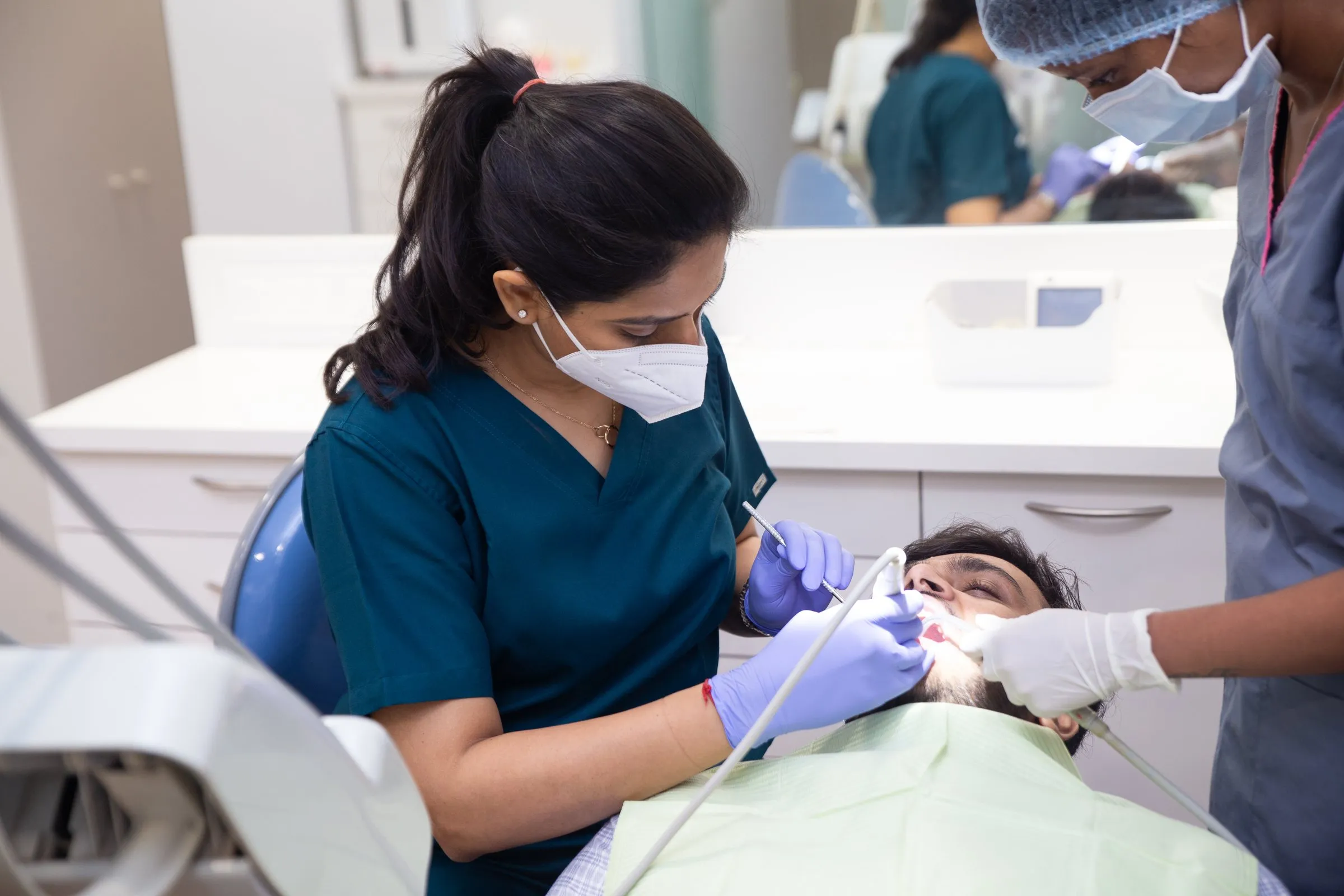
The most uncomfortable part, honestly, is the sensation of pressure while the tooth is loosened, and the sounds. There is no pain. For an impacted tooth, the gum is opened and the tooth is often sectioned into two or three pieces so each comes out easily rather than levering the whole tooth against the bone; this is gentler, not more aggressive. From the first injection to biting on gauze is usually 20 to 60 minutes.
You go home numb for another two to three hours. That evening is sore. Day two is the peak of swelling and stiffness. By day three most people are eating soft food comfortably, and by the end of the week they have forgotten about it apart from a slightly tender gum.
Why patients choose i-Smile for wisdom teeth
- X-ray before any decision. You see the tooth’s position and hear whether it needs to go, can wait, or should be referred, with the cost of each option.
- Proper anaesthesia and patience. We wait until you are fully numb, test it, and stop and top up if you feel anything.
- Sensible referrals. A lower tooth wrapped around the nerve goes to an oral surgeon with a 3D scan; we would rather refer than take a risk with your lip sensation.
- A direct number after surgery, and a review visit included in the price.
- Evening slots so the recovery falls over a weekend if you prefer.
Recovering well
- Bite on the gauze for 30 minutes, then remove it. A little oozing that evening is normal.
- Ice pack on the cheek for the first day.
- No smoking, straws, spitting or hard rinsing for 72 hours; the clot in the socket is what heals you.
- From day two, gentle warm salt-water rinses after meals.
- Soft food, chew on the other side, take the medicines as prescribed even if you feel fine.
- Brush your other teeth normally; keep the brush away from the socket for a few days.
- Call us if pain gets worse after day three rather than better, if bleeding will not stop, or if swelling increases after day three.
What changes the price
- Simple or surgical, decided by the X-ray.
- Depth and angle of an impacted tooth, and how close it is to the nerve.
- Number of teeth removed in one visit, priced lower per tooth.
- Treating infection first, if a course of antibiotics and a cleaning are needed before removal.