
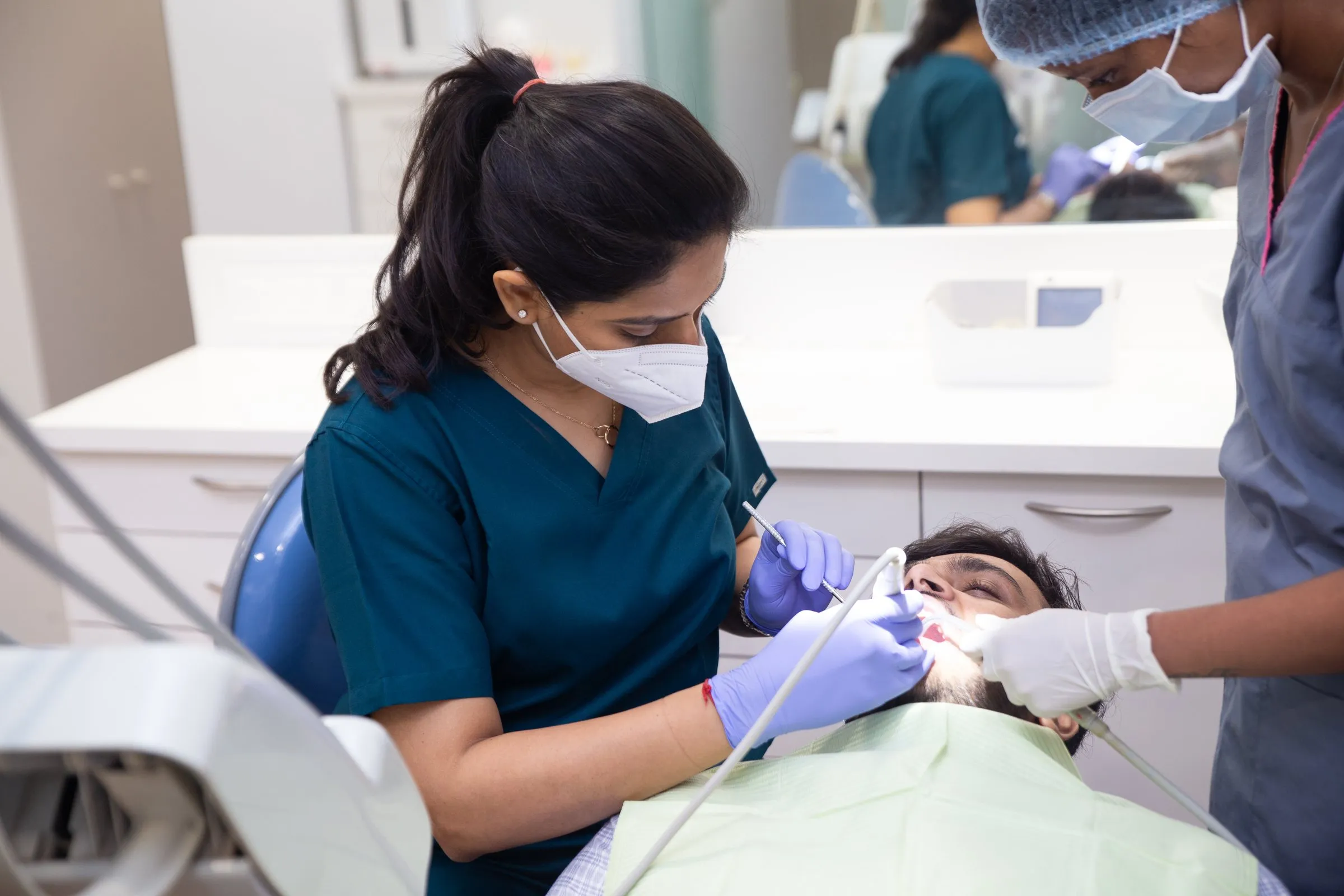
What a root canal actually involves
Inside every tooth is a soft core of nerves and blood vessels called the pulp. When decay, a crack or a knock lets bacteria reach it, the pulp becomes inflamed and then infected. That is the throbbing, keep-you-awake pain most people associate with a root canal. The treatment itself is what stops it.
A root canal removes the infected pulp, cleans and shapes the fine canals running down each root, disinfects them and seals them so bacteria cannot return. The outer tooth stays where it is. You keep your own tooth, your bite stays the same, and the neighbouring teeth are not touched.
At i-Smile we use rotary endodontic instruments, flexible nickel-titanium files driven by a slow handpiece, rather than hand files alone. They follow curved canals more smoothly and cut the time a tooth spends open. An electronic apex locator measures the exact length of each canal, so the filling reaches the tip of the root without going past it. Together these are what make single-visit treatment routine rather than exceptional.
What treatment actually feels like
The honest answer is that a root canal today feels much like having a large filling done. The tooth is numbed with local anaesthetic after a numbing gel on the gum, and Dr. Trushita Vyas, our root canal specialist, checks that you feel nothing before starting. Inflamed teeth can be harder to numb, so a second dose is sometimes needed. Tell us if you feel anything and we stop.
During the treatment you will hear a soft whirring and feel some pressure and vibration, but not pain. Most single-rooted front teeth are finished in about an hour. Molars have three or four canals and take closer to 90 minutes. You can drive, work and eat on the other side once the numbness fades, usually within two to three hours.
The following day the tooth may be tender to bite on. That is the ligament around the root settling down, not the infection returning, and it eases over two to three days. A standard painkiller is enough for most people.
Why patients choose i-Smile for root canals
- A dedicated root canal specialist. Dr. Trushita Vyas focuses on painless, single-visit root canal treatment, working alongside Dr. Upasana Gosalia, who founded the clinic in 2012.
- Rotary instruments and an apex locator on every case, which is what makes accurate single-visit treatment possible.
- Digital X-rays (RVG) before, during and after treatment, at far lower radiation than film, so we can confirm the canals are filled to the tip.
- You see what we see. An intraoral camera lets us show you the decay and the finished result rather than just describe it.
- Evening appointments. The clinic is open until 9 pm Monday to Saturday, so a toothache does not have to wait for the weekend.
- Every instrument autoclaved, every time.
Aftercare: protecting the treated tooth
A tooth that has had a root canal is dry and more brittle than a living tooth, and a molar without a crown can split when you bite on something hard. Getting the crown fitted within a few weeks is the most important part of aftercare, and the one most often skipped.
Until the crown is on:
- Chew on the other side and avoid hard or sticky food.
- Brush and floss the tooth normally. The temporary filling can handle it.
- If the temporary filling breaks or falls out, call us. The canals need to stay sealed.
After the crown is fitted, the tooth needs nothing special. Brush twice a day, floss, keep your six-monthly check-ups, and the tooth can serve you for many years. We take a follow-up X-ray at a later check-up to confirm the bone around the root has healed.
What changes the price
- Which tooth. Front teeth have one canal and cost less. Molars have three or four canals and take longer.
- First treatment or re-treatment. Redoing a root canal that has failed means removing the old filling material first, which is more work, is done with our visiting endodontist, and costs ₹9,000.
- Severity of infection. A large abscess may need medication placed inside the tooth and a second visit.
- The crown. Budget for the crown as part of the treatment, not an afterthought. A zirconia crown at i-Smile costs ₹10,000.
- Rebuilding the tooth. If very little tooth remains, a post and core is placed before the crown, and this is quoted separately.